



The Significance of the 10 Plagues of Egypt (Part 1) By Babatunde Olugboji
This week, we’ll start a 2-part mini-series on what’s commonly referred to as the Ten Plagues, detailed in Exodus chapters 7 through 12. These plagues were a series of ten calamities inflicted upon Egypt by God to persuade Pharaoh to liberate the Israelite slaves who had suffered under oppression in Egypt. When God appointed Moses to lead the children of Israel out of bondage, He assured him that He would demonstrate His wonders to validate the authority of Moses. (Exodus 3:20) for at least two reasons: to reveal to the Israelites that the God of their ancestors was alive and deserving of their reverence (Exodus 6:6–8; 12:25–27), and to demonstrate to the Egyptians that their deities were powerless (Exodus 7:5; 12:12; Numbers 33:4).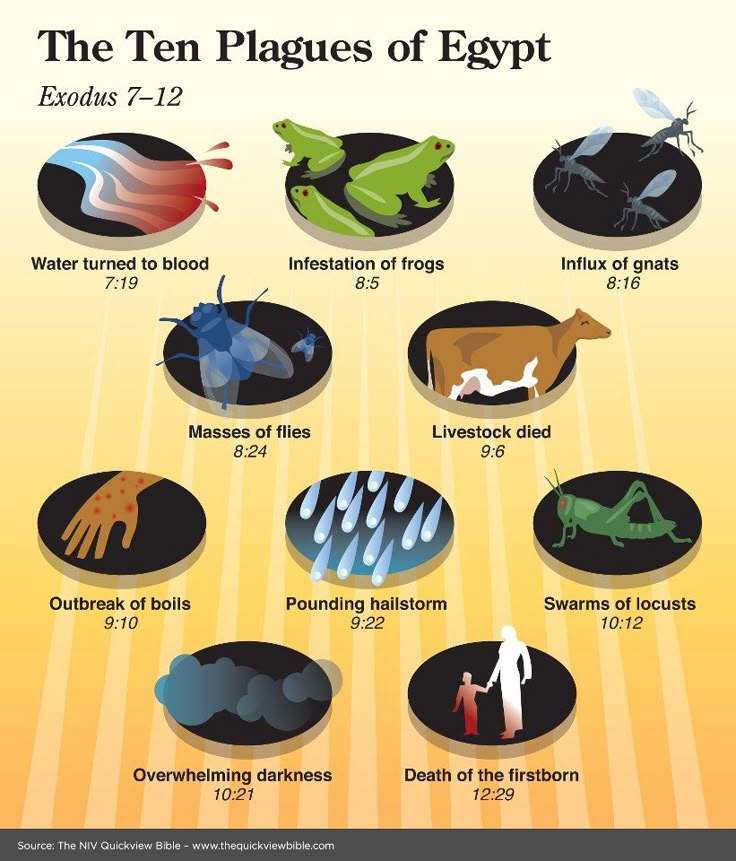
The Israelites had endured over 400 years of enslavement in Egypt, during which they had lost their faith in the God of their ancestors. Although they acknowledged His existence and worshiped Him, they were skeptical about His ability or willingness to liberate them from their oppression. The Egyptians, similar to many pagan societies, revered a multitude of nature deities and attributed the natural occurrences they observed to these gods’ powers.
They had deities for the sun, the river, childbirth, crops, and more. Events such as the annual flooding of the Nile, which enriched their agricultural lands, were seen as manifestations of the might of their gods. When Moses confronted Pharaoh, demanding the release of the Israelites, Pharaoh replied, “Who is the Lord, that I should heed His voice and let Israel go? I do not know the Lord, nor will I let Israel go” (Exodus 5:2). This marked the beginning of the contest to demonstrate whose God held greater power.
1. The initial plague, which transformed the Nile into blood, served as a judgment against Apis, the Nile god, Isis, the goddess of the Nile, and Khnum, the Nile’s guardian. The Nile was also regarded as the lifeblood of Osiris, who was believed to be reborn each year with the river’s flooding. The river, essential to daily existence and the national economy, suffered greatly, resulting in the death of millions of fish and rendering the water unusable. Pharaoh was informed, “By this you will know that I am the LORD” (Exodus 7:17).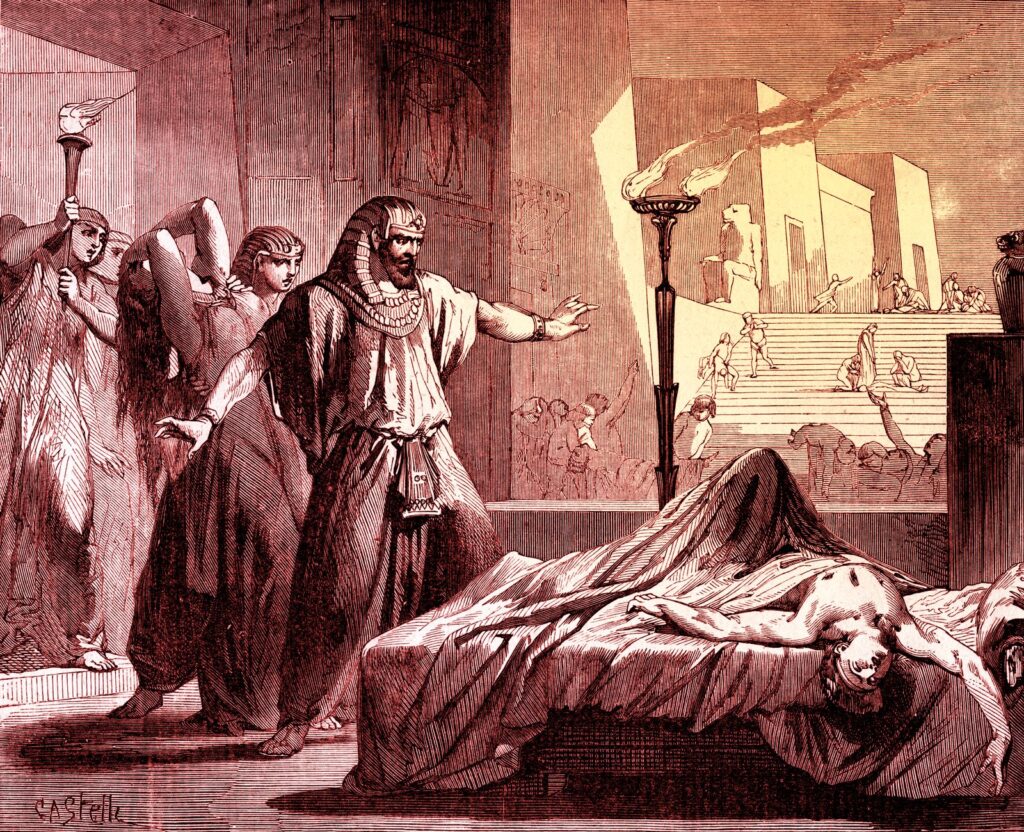
2. The second plague, which caused frogs to emerge from the Nile, was a judgment against Heqet, the frog-headed goddess of childbirth. Frogs were considered sacred and were not to be harmed. God caused the frogs to invade every corner of the homes of the Egyptians, and when they died, their decaying bodies accumulated in repulsive heaps throughout the land (Exodus 8:13–14).
3. The third plague, which involved gnats, served as a judgment against Set, the deity associated with the desert. In contrast to the earlier plagues, the magicians were unable to replicate this one and informed Pharaoh, “This is the finger of God” (Exodus 8:19).
4. The fourth plague, consisting of flies, was a judgment directed at Uatchit, the god of flies. During this plague, God made a clear distinction between the Israelites and the Egyptians, as the swarms of flies did not invade the regions inhabited by the Israelites (Exodus 8:21–24).
5. The fifth plague, which resulted in the death of livestock, was a judgment against the goddess Hathor and the god Apis, both of whom were represented as cattle. Similar to the previous plague, God safeguarded His people from this affliction, while the cattle of the Egyptians perished. God was progressively dismantling the economy of Egypt while demonstrating His capacity to protect and provide for those who followed Him. Pharaoh even dispatched investigators (Exodus 9:7) to ascertain whether the Israelites were enduring the same suffering as the Egyptians, but this only hardened his heart against the Israelites.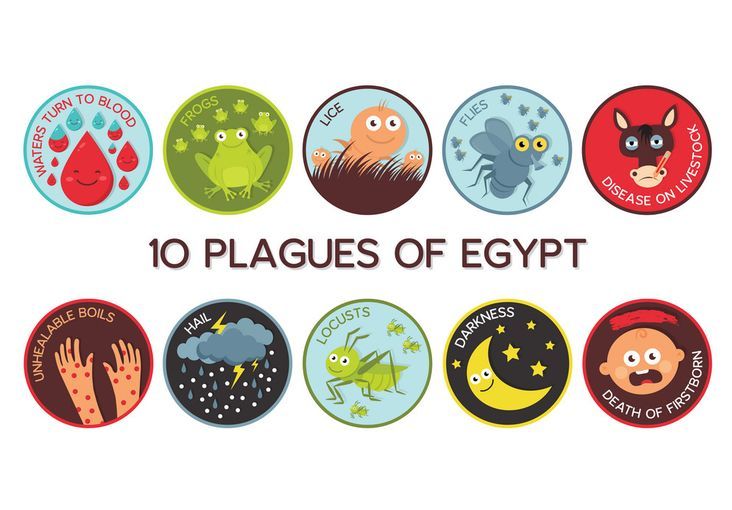
6. The sixth plague, which caused boils, was a judgment against multiple deities associated with health and disease, including Sekhmet, Sunu, and Isis. At this point, the Bible notes that the magicians “could not stand before Moses because of the boils.” This clearly illustrated the impotence of these religious leaders in the face of the God of Israel.
To be continued
Have a good week.
Questions or comments?
+1-609-887-6610 (WhatsApp)
