



The Word of God as Food (Part 3) By Babatunde Olugboji
This week concludes this mini-series. First, we will examine Moses’ recollection of events when Israel is on the cusp of entering the promised land. In Deuteronomy 8:2-3 he provides a pastoral interpretation of what God was really doing in his provision of manna:
“And you shall remember the whole way that the Lord your God has led you these forty years in the wilderness, that he might humble you, testing you to know what was in your heart, whether you would keep his commandments or not. And he humbled you and let you hunger and fed you with manna, which you did not know, nor did your fathers know, that he might make you know that man does not live by bread alone, but man lives by every word that comes from the mouth of the Lord.”
God allowed His redeemed people to experience hunger so that he could provide for them miraculously. However, the miraculous provision – and the wonder it might inspire – was not the sole purpose. The Lord aimed to both test and instruct his people. He sought to determine if they would fully trust and adhere to his commands. Additionally, he intended to teach them that living as God’s people in God’s creation transcends mere food and drink, or even the miraculous sustenance provided from heaven.
In a sermon on this text, Charles Spurgeon expresses his astonishment at an aspect we frequently overlook when attempting to apply these verses. He notes the remarkable fact that bread possesses the ability to nourish the human body: “The process is a very wonderful one by which bread turns into flesh, and blood, and bone, and muscle, and hair, and all sorts of things, by a perpetual working of the power of God.” Even more astonishing is the way in which physical sustenance maintains the vitality of both body and spirit.
He acknowledges, “And how is it that the physical substance in bread somehow contributes to the preservation of our spirit in relation to this flesh and blood? I am unable to elucidate this enigma, but I hold it to be a perpetual miracle performed by God.” For Spurgeon, the essential idea is that, in a more exalted yet similarly enigmatic and wondrous manner, God employs His word to nourish both body and soul.
The word in our text probably alludes to the laws and promises of God. The laws of God are meant to be followed; his promises are intended to be believed. Through these means, Israel continues to be a loyal covenant partner and a beneficiary of God’s blessings. Spurgeon insightfully emphasizes the significance of “every word,” noting that we often have preferred elements of Scripture that we tend to elevate while overlooking others, which may include doctrines, precepts, promises, histories, prophecies, and warnings or threats. What is his advice?
If you limit your diet to just one or two items, every doctor will inform you that there is a risk that your body may not receive all the necessary nutrients it needs. A diverse diet is advised for those who wish to maintain robust health.
Similarly, in spiritual matters, if you focus solely on one aspect of God’s Word, you may sustain yourself on it, but the likelihood is that you will not achieve complete spiritual well-being due to the absence of certain nourishment that the entirety of the Word could have provided you had you engaged with it fully. Every Word of God is essential for man to thrive in the most optimal and healthy condition.
Regardless of how the word reaches us, whether it is a voice from heaven, emerging from a cloud, atop a mountain, inscribed on tablets of stone, written on parchment, conveyed through the Son, or presented in a book, Spurgeon urges us, “Let it be to you, spiritually, your house, your home, your food, your medicine, your clothing, the one essential element of your soul’s life and growth.” He addresses us, just as he did his congregation nearly one hundred and fifty years ago, saying, “Oh, adhere to the Word, my brothers! Hold fast to it as God’s Word, and as if it is spoken from his mouth. Absorb it into your soul; you cannot have an excess of it. Feast on it day and night, for in this way, God will enable you to live the life that is truly life.”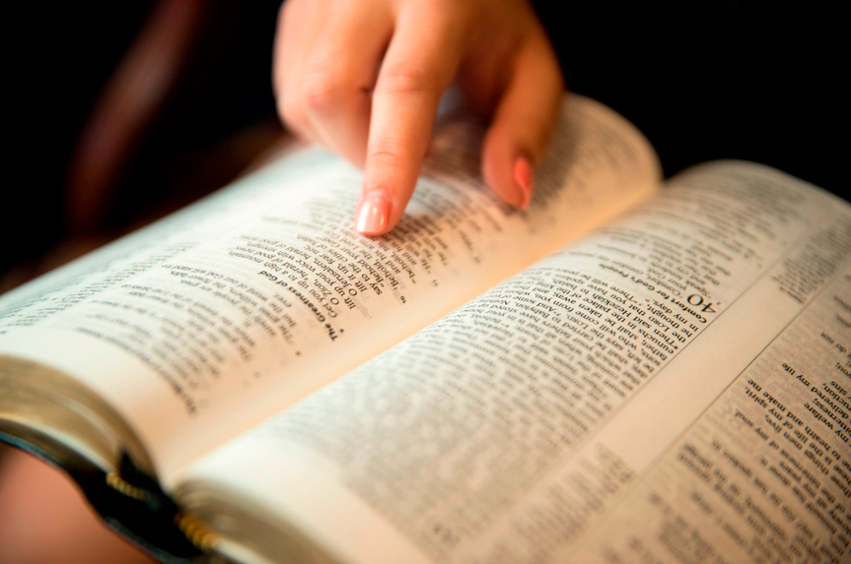
Only God’s word can sustain hope, joy, and connection to the life of God, especially when bread ceases to fall from the sky.
Have a great week.
Questions or comments?
+1-609-887-6610 (WhatsApp)
